


Some owners take the plan and do the work themselves. Others want help getting the first year's practices in the ground. Either way, the work follows the plan, and it gets recorded for your annual report.
Soil test first, then a planting matched to your soil and to whether you need attraction during season or nutrition through the year. Small hunting plots and larger forage plots.
Thinning cedar and brush, opening up closed timber, and keeping old pastures from growing up, so there is browse and cover where deer need it.
Wood duck boxes, songbird boxes, brush piles, and deferred mowing, placed where they will be used and recorded for your annual report.
Stand counts and camera surveys set up to answer real questions about your deer, and the records your plan calls for.
Where to put stands and blinds, how to get in and out without pushing deer, and where to leave the property alone.
A practical approach to feral hogs and other pressures, as part of the overall plan.
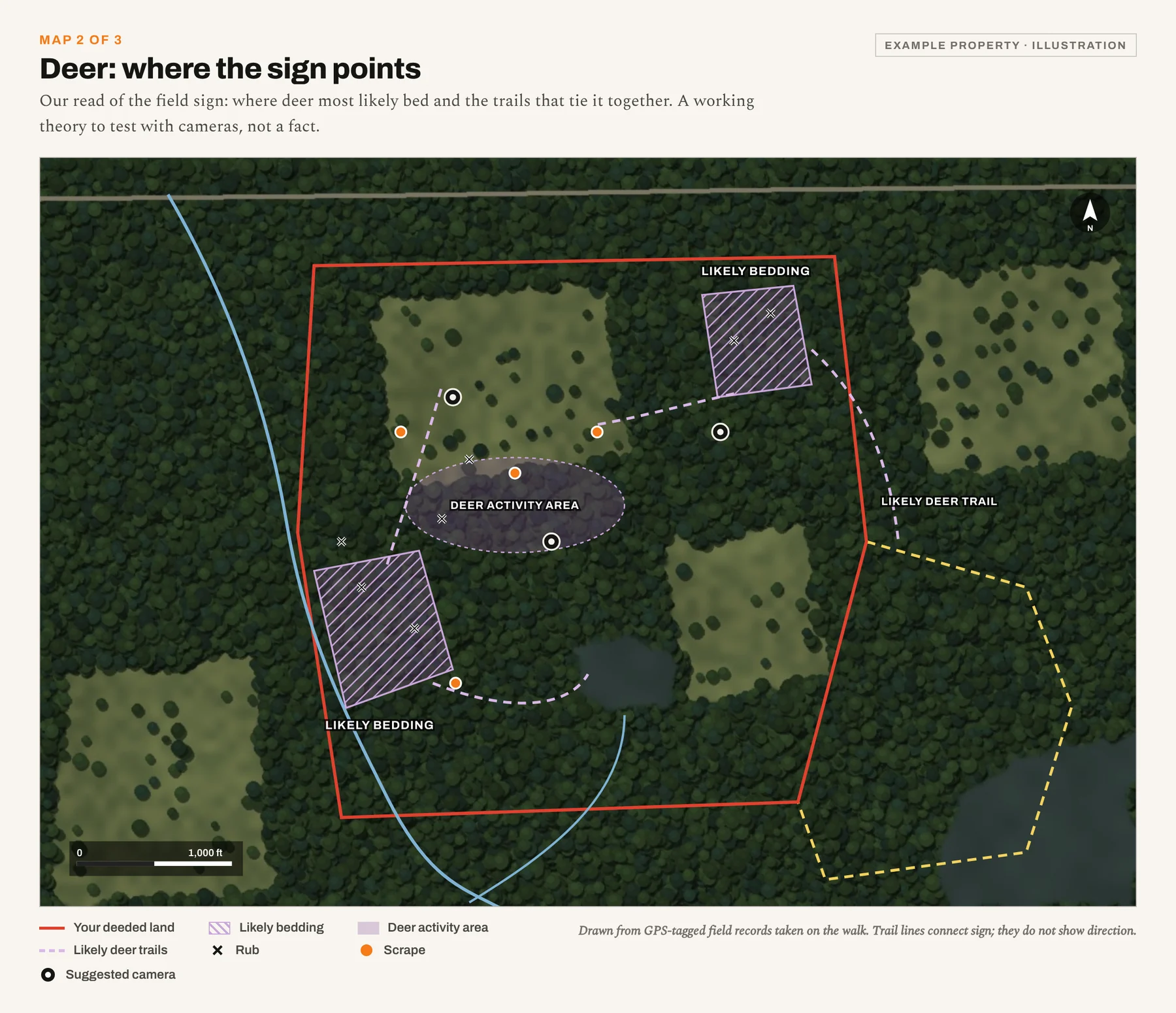
Whitetail are where we are strongest. A food plot in the wrong place relative to bedding and access can make a property harder to hunt, not easier. So the work starts from where the sign points: where deer bed, how they move, and where you can get in without being noticed.
Most of this work also counts toward the practices the Texas wildlife tax exemption asks for, so the property that hunts better is also the one that keeps its valuation.
We quote habitat work job by job, after we have seen the ground.
Tell us about your property and what you want done. We will look at it with you and quote the work.