


Built from walking your property. It lays out how to manage for the species you care about: what matters first, what to plant and where, how to handle water and cover, who does each job, and how you'll know it's working.
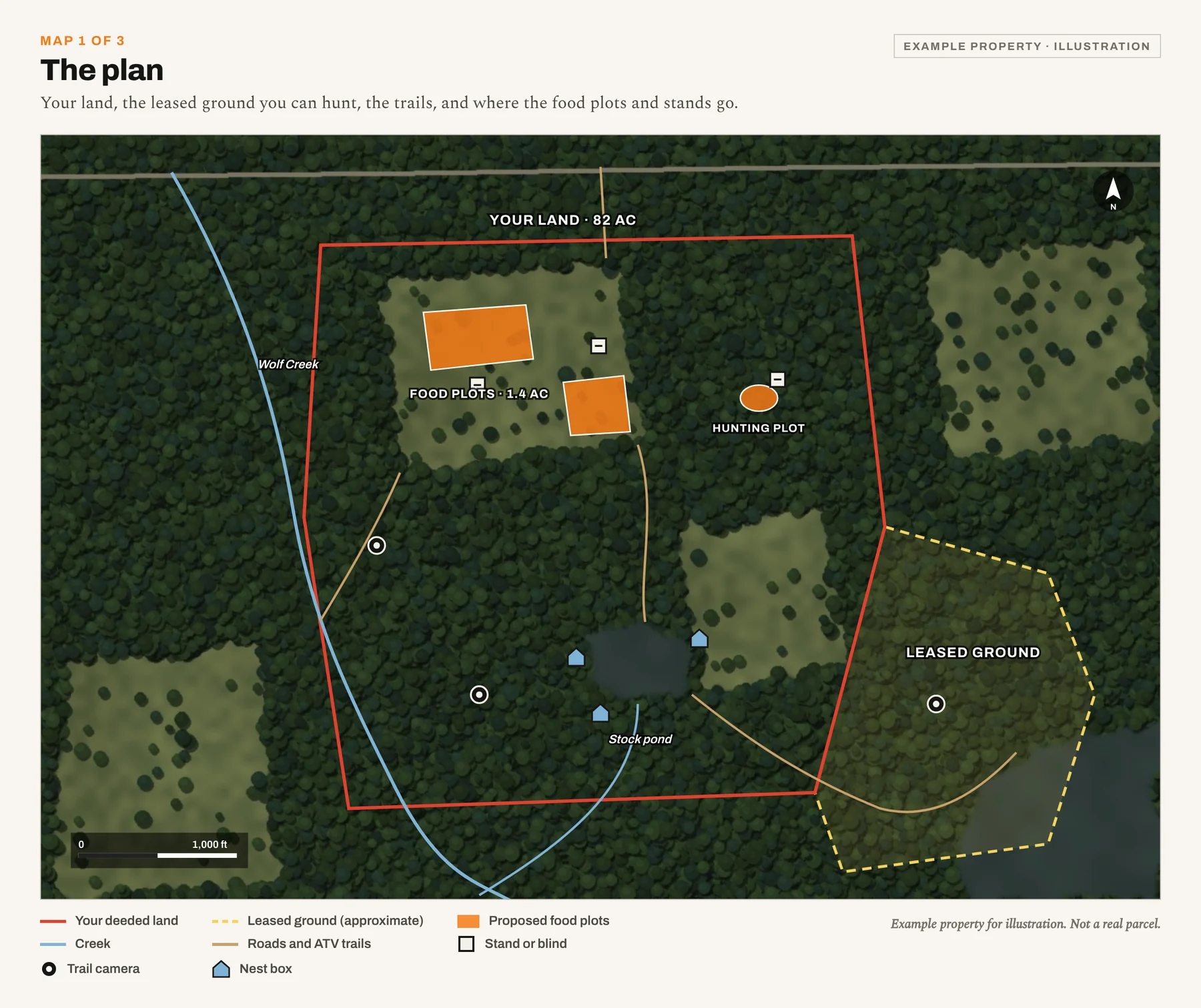
The site visit, the habitat report, the maps, the plan, and help with filing are all part of a management plan. You don't pay for them separately.
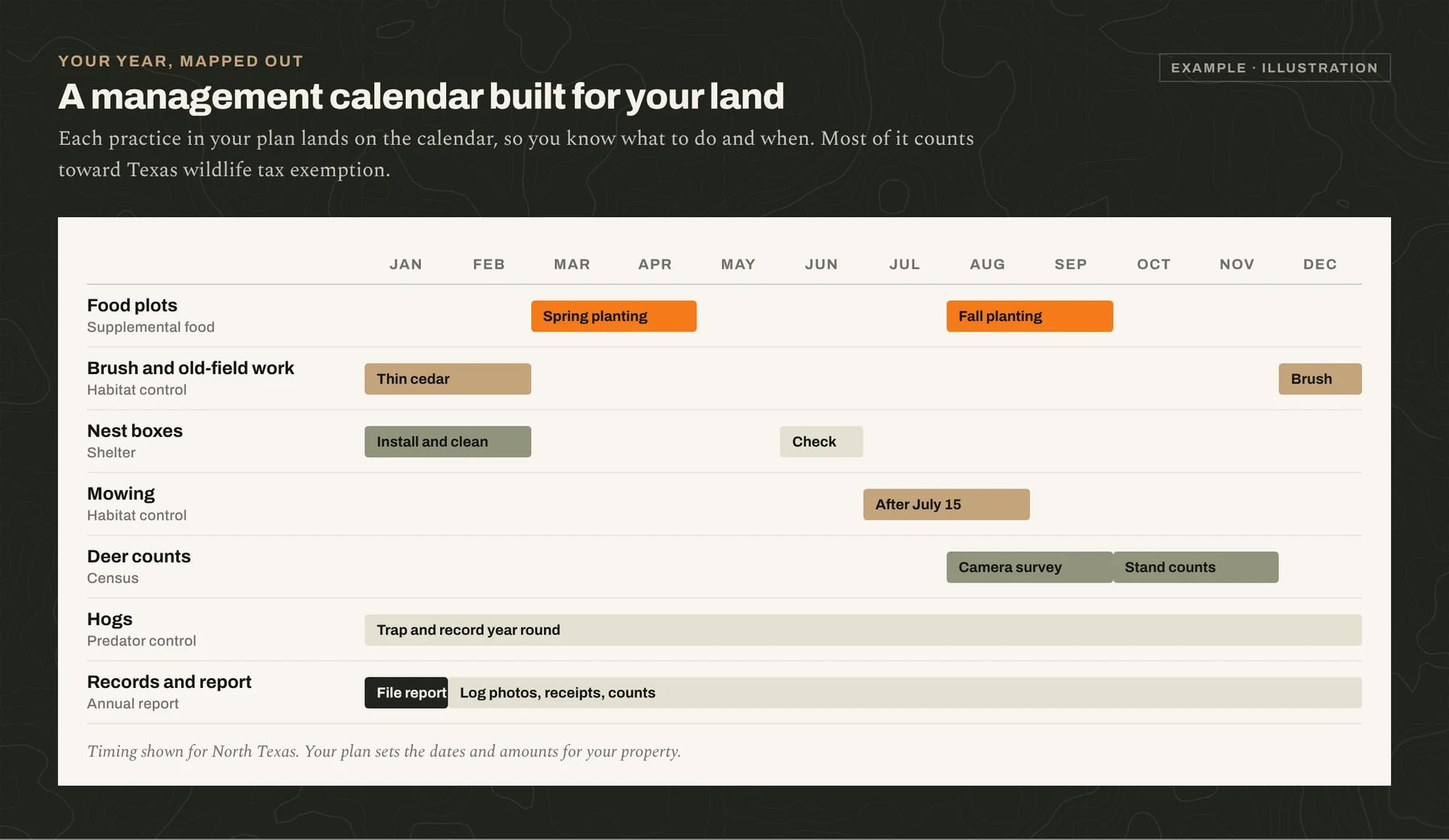
Texas offers a wildlife tax exemption for land that already carries an agricultural or timber valuation and is actively managed for native wildlife under a written plan. The state asks for at least three of seven qualifying practices each year, and most good habitat work already falls inside them.
We prepare your plan on the Texas Parks and Wildlife form and help you file it with your county appraisal district. You sign and file as the owner, and the chief appraiser makes the decision. How the wildlife tax exemption works.
Take the plan and carry it out yourself. It tells you what to do, when, and how much, and how to keep the records that back it up.
Have us put the first year's practices on the ground with you: food plots, nest boxes, brush work, and the census. Habitat work.
A yearly visit, a look back at what changed, and help with the annual report. Annual reports and yearly help.
Every plan starts with an on-foot assessment. Tell us about your land and we will set up a call.